Expert Safety Services
Fall Protection 101: What Every Crew Needs to Know Before Working at Height
Falls are the leading cause of death in construction, and they’re entirely preventable. Yet every year, OSHA’s “Fall Protection – General Requirements” standard tops the list of most-cited violations in the country. Not because the rules are unclear — but because fall protection often gets treated as a box to check rather than a system to understand.
It’s a System, Not a Single Piece of Gear
A harness alone doesn’t stop a fall. Fall protection works as a full system: anchor point, connector (lanyard or self-retracting lifeline), and body harness, all rated to work together. If any one piece is mismatched, damaged, or improperly rated, the whole system can fail — even if the harness itself looks brand new.
Know Your Anchor Point
Every anchor point used for fall protection needs to be capable of supporting the required load — typically 5,000 lbs per worker for a single-point anchor, unless it’s part of an engineered system. “It looks sturdy” is not an inspection. If you don’t know the rated capacity and inspection history of the anchor you’re clipping into, don’t clip into it.
Inspect Gear Every Single Time
Harnesses, lanyards, and connectors should be visually inspected before every use — not just at the start of the season. Look for frayed webbing, cracked or corroded hardware, stitching that’s pulled loose, and any signs the equipment has previously arrested a fall (which means it needs to be retired, full stop).
Understand Fall Clearance
This is the piece most crews underestimate. Fall clearance is the total distance needed below a worker to safely stop a fall without hitting the ground or a lower level — accounting for lanyard length, deceleration distance, harness stretch, and worker height. A system that works perfectly on a 40-foot roof can still result in a ground strike on a 15-foot structure if clearance wasn’t calculated first.
Have a Rescue Plan Before You Need One
OSHA requires that employers have a prompt rescue plan for any worker who falls and is left suspended in a harness — because suspension trauma can become life-threatening in as little as 15-20 minutes. “We’ll figure it out if it happens” is not a plan. Your crew should know exactly how a suspended worker gets rescued before the first person ever goes up.
Training Makes the Difference
Fall protection equipment is only as effective as the person using it. Competent Person training teaches your team to inspect gear, calculate clearance, recognize hazards, and respond to an emergency — turning fall protection from a compliance requirement into muscle memory.
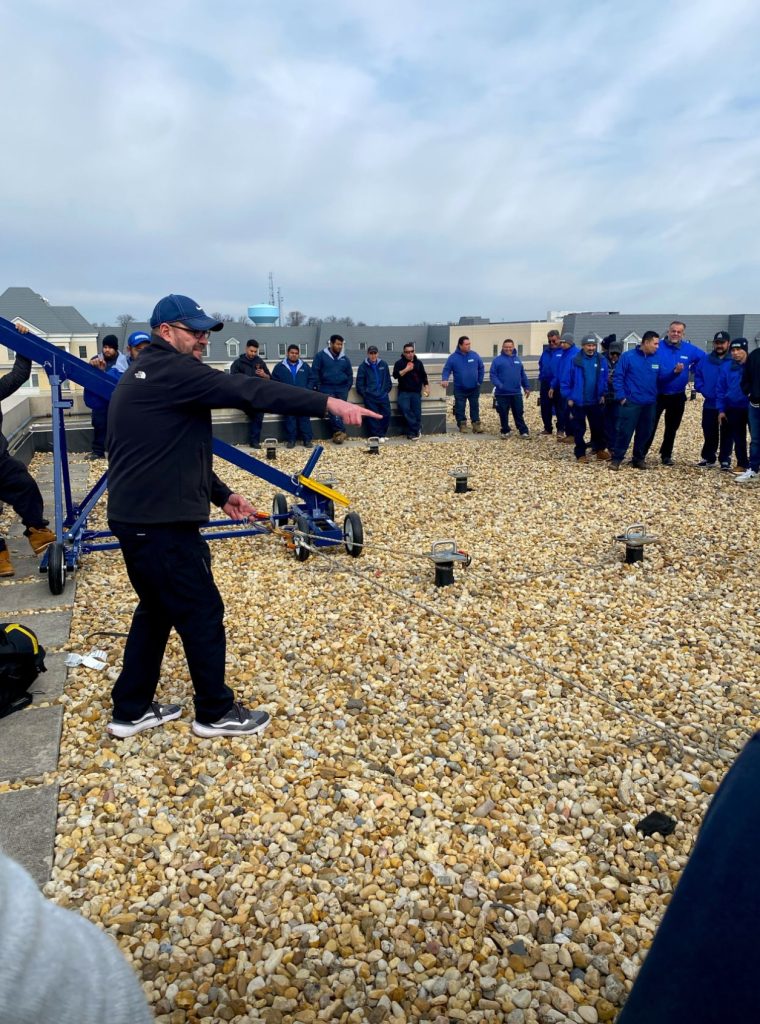
At Expert Safety Services, our hands-on fall protection and rope access training programs are built around real job-site scenarios, not just classroom theory. Whether your crew needs foundational fall protection training or advanced rope descent certification, we’ll get them ready for the work they’re actually doing.
Ready to get your crew properly trained? Explore our training programs or call us at (309) 530-1215.