Expert Safety Services
SPRAT, IRATA, or RDS: Which Rope Access Certification Does Your Crew Actually Need?
SPRAT. IRATA. RDS. They all involve ropes, they all involve height, and they all sound like they might do the same thing. But they’re built for different kinds of work — and picking the wrong one can leave your crew certified for a job they’re not actually doing.
If you’re new to rope-based work at height, the alphabet soup of certifications can be genuinely confusing. SPRAT. IRATA. RDS. They all involve ropes, they all involve height, and they all sound like they might do the same thing. But they’re built for different kinds of work — and picking the wrong one can leave your crew certified for a job they’re not actually doing.
Here’s a plain-English breakdown to help you figure out what your team needs.
Rope Descent Systems (RDS) — Built for Window Cleaning
RDS training, developed alongside the International Window Cleaning Association (IWCA), is designed specifically for controlled, one-way descents from a fixed anchor point — the classic image of a window cleaner rappelling down a building face. It covers rig setup, descent control devices, anchor use, and emergency self-rescue, all tailored to the routine, repetitive nature of exterior building maintenance.
Best for: Window cleaning crews, building maintenance workers, and anyone doing descent-only work from rooftop anchors.
SPRAT — Built for Multi-Directional Industrial Rope Access
SPRAT (Society of Professional Rope Access Technicians) certification goes well beyond descending. It trains technicians in a full two-rope system — ascending, descending, traversing, rope transfers, and rescue — for work that isn’t limited to a straight drop from the roof. Think inspection, maintenance, and repair work on structures like towers, wind turbines, dams, and industrial facilities where technicians need to move freely across a structure, not just down it.
SPRAT certifications are tiered (Level I, II, and III), with each level building on documented field hours and skills from the one before it.
Best for: Industrial rope access technicians, inspection and maintenance crews, and anyone whose job requires moving in more than one direction while on rope.
IRATA — SPRAT’s International Counterpart
IRATA (Industrial Rope Access Trade Association) is essentially SPRAT’s global sibling — same core discipline of two-rope industrial access, same tiered certification structure, but headquartered internationally and more commonly required on projects outside North America or by multinational clients. In the U.S., SPRAT is generally the more widely recognized standard, but some companies and clients specifically require IRATA certification depending on where the work is happening.
Best for: Crews working internationally, or on contracts that specifically require IRATA credentials.
So Which One Does Your Crew Need?
Ask yourself one question: Is the work a straight descent, or does it require moving around the structure?
- If your team is cleaning windows or doing simple rooftop-to-ground descent work → RDS
- If your team needs to inspect, maintain, or repair structures while moving in multiple directions on rope → SPRAT (or IRATA, if the job specifically calls for it)
Many crews end up needing both — RDS for routine descent work, and SPRAT for more complex access jobs that come up less often but require a higher skill level.
Get Trained the Right Way
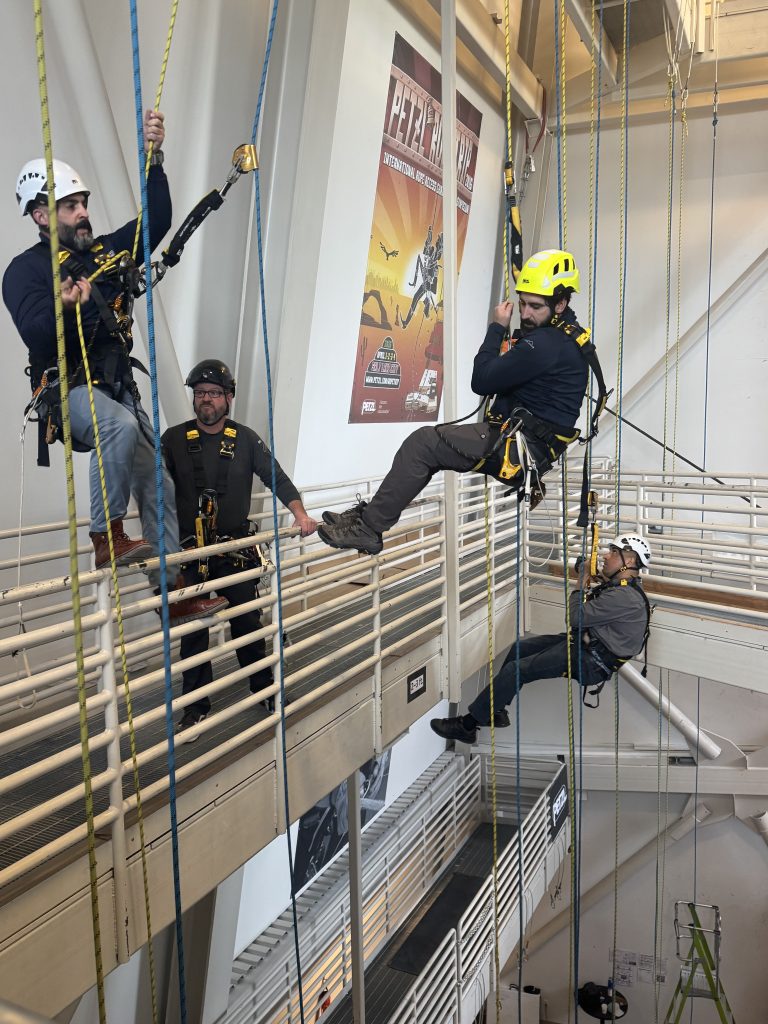
At Expert Safety Services, we offer hands-on RDS and SPRAT Level I training right here at our facility in Bloomington, IL — taught by instructors with real field experience, not just a certification to hand you. If you’re not sure which path fits your crew’s work, we’re happy to talk it through before you sign up for the wrong class.
Not sure which certification your crew needs? Contact us or call (309) 530-1215 and we’ll help you figure it out.